Västerlånggatan
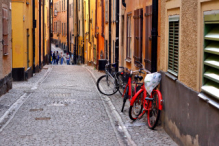
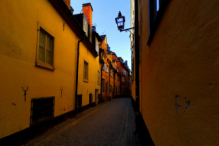
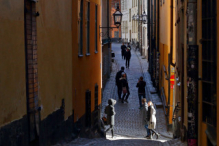
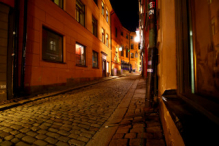
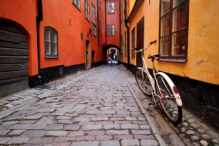
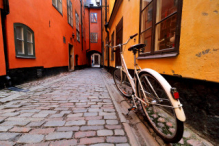
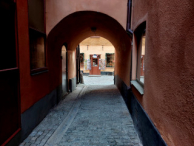
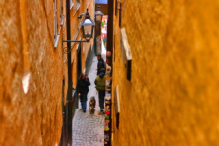
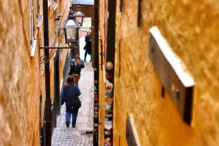
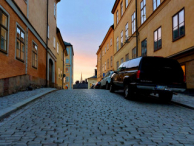
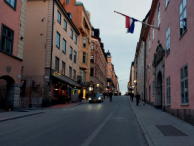
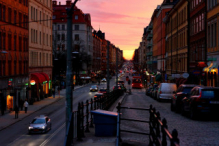
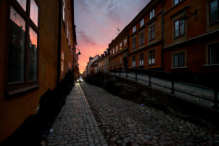
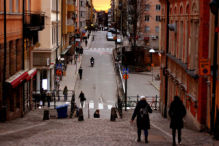
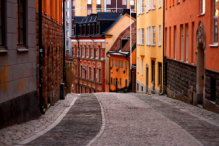
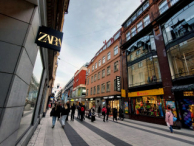
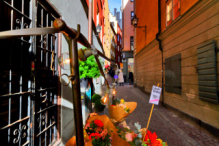
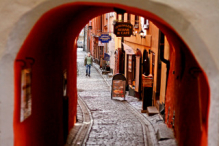
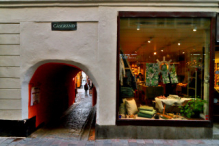
Västerlånggatan (English: The Western Long Street) is a historic pedestrian street in Gamla stan, the old town of Stockholm, Sweden. Stretching southward between the squares Mynttorget and Järntorget, the street follows the course of the city's now demolished 13th-century defensive wall. During the 15th century it was known collectively with its eastern counterpart as Allmänningsgatan ("The Common Street") or Långa gatan ("The Long Street"), and its present name was officially established in 1885. In its earliest form the street was little more than a pathway tracing the shoreline outside the city walls, linking the northern and southern city gates. By the 19th century, the medieval street facades were transformed to the taste of the era, with plaster ornaments and cast-iron colonettes replacing earlier medieval fronts, resulting in the large shop windows still visible today. The street was connected to Drottninggatan by the bridge Riksbron in 1907, helping to sustain its commercial vitality. Today Västerlånggatan is one of Gamla stan's busiest and most picturesque thoroughfares, lined with boutiques, cafés, and tourist shops, and is also notable for featuring as the least expensive property on the Swedish edition of the Monopoly board.
| 







 Album:
