Kastellet, Stockholm
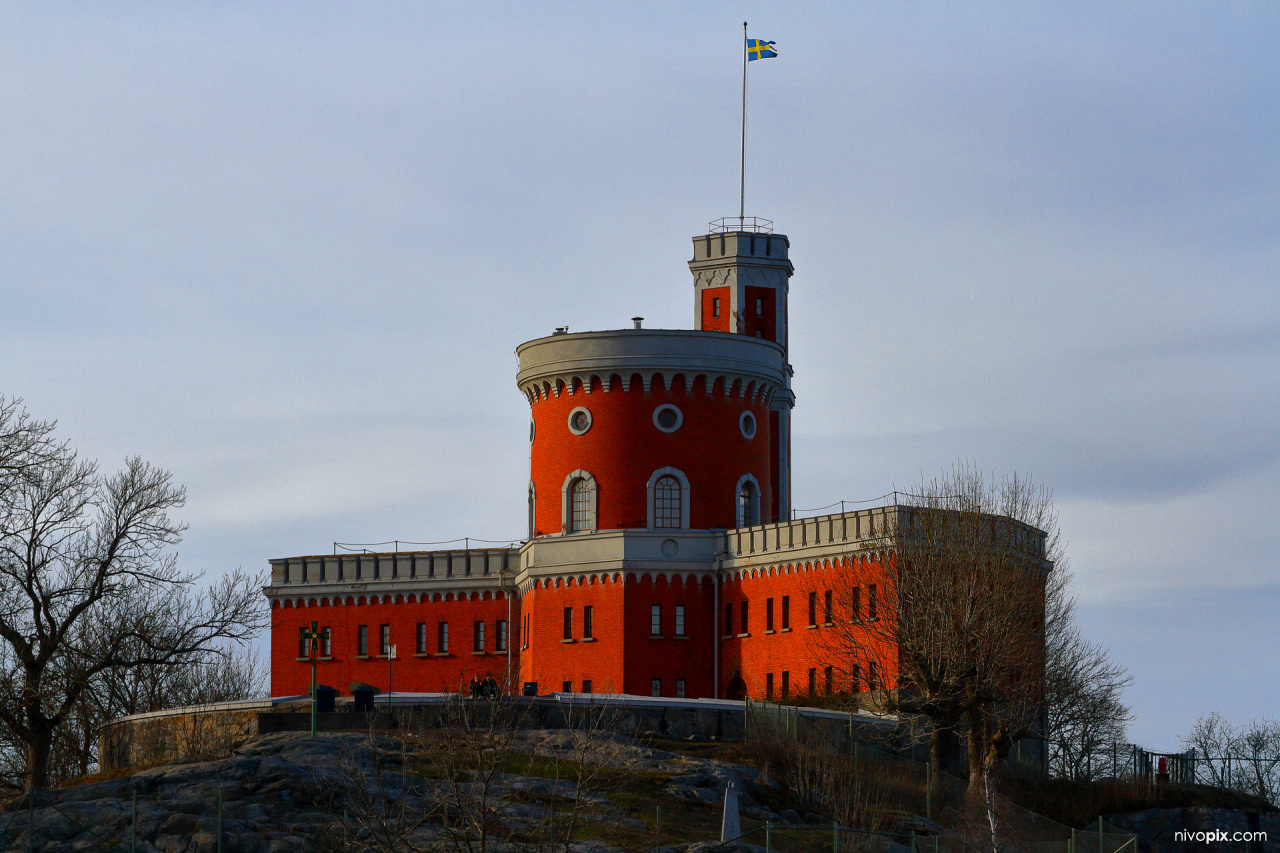
Kastellet is a small citadel situated on the islet of Kastellholmen in central Stockholm, Sweden. The first fortification on the site was built in 1667, designed by Governor-General and Field Marshal Erik Dahlbergh (1625–1703). After the Swedish fleet relocated to Karlskrona in 1680, the castle fell into disrepair. Wikipedia
The structure exploded in June 1845 and was subsequently rebuilt between 1846 and 1848 to the design of military officer and architect Fredrik Blom (1781–1853). It consists of a round tower with red brick walls and a 20-metre-high (66 ft) stair tower. Wikipedia
The citadel's most distinguishing feature is a forked Swedish flag flown above it, which historically signified the state of the nation — when raised, it indicated peace; when lowered or replaced, it signalled danger. This practice dates back to the citadel's founding in 1667, when it also served as a lookout post for incoming ships. Atlas Obscura
Kastellet regained a defensive function during World War II, becoming part of Stockholm's permanent air defence and housing fast-firing anti-aircraft guns. The Swedish Coastal Artillery training school departed in 1990. Wikipedia
To this day, the Military Ensign of Sweden is hoisted and lowered at the top of Kastellet each day, serving as a symbol that the nation remains at peace. W
| 












 Album:
