Kreditbanken Building - Stockholm syndrome
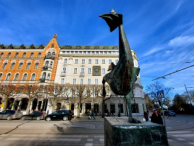
The Kreditbanken building on Norrmalmstorg square in central Stockholm was the site of one of the most psychologically significant criminal events of the 20th century. On 23 August 1973, Jan-Erik Olsson, a convict on prison leave, entered the bank armed with a submachine gun, took four employees hostage, and demanded three million Swedish kronor, a getaway car, and the release of his imprisoned associate Clark Olofsson. Swedish authorities complied with several demands, but refused to allow the hostages to leave with the robbers, triggering a six-day standoff broadcast live on national television — the first crime in Swedish history to receive such coverage. During their captivity, the four hostages — Birgitta Lundblad, Elisabeth Oldgren, Kristin Enmark, and Sven Säfström — developed a striking emotional bond with their captors, expressing greater fear of the police than of the men holding them. The siege ended on 28 August when police deployed tear gas into the vault. Both men were arrested; Olsson was sentenced to ten years imprisonment, while Olofsson was ultimately acquitted on appeal.
The hostages' unexpected behaviour prompted Swedish criminologist and psychiatrist Nils Bejerot, who had been advising police during the crisis, to coin the term Norrmalmstorgssyndromet — later known internationally as Stockholm syndrome — to describe the psychological phenomenon in which hostages develop positive emotional attachments to their captors. Mental health professionals understand it as a trauma-induced coping mechanism rather than a recognised clinical disorder; it does not appear in the Diagnostic and Statistical Manual of Mental Disorders (DSM-5). The term entered widespread global use following the 1974 kidnapping of American heiress Patty Hearst. The Kreditbanken building has since been converted into a hotel and is today regarded as a landmark in both Stockholm's history and the history of modern psychology.
| 
























 Album:
